
for all uses of Foujita’s works, name, and image.
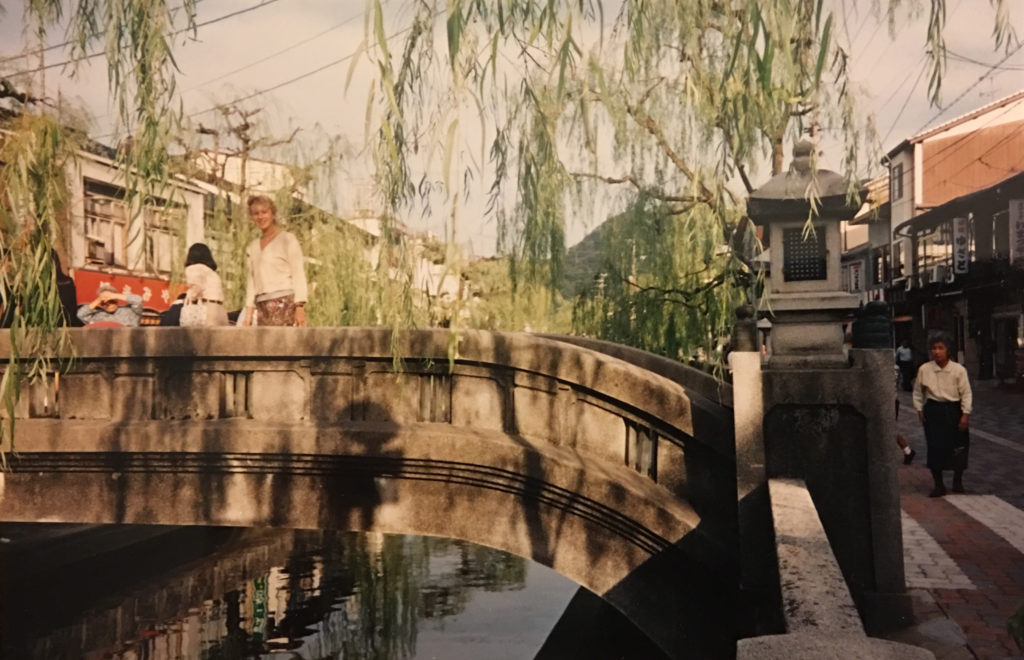
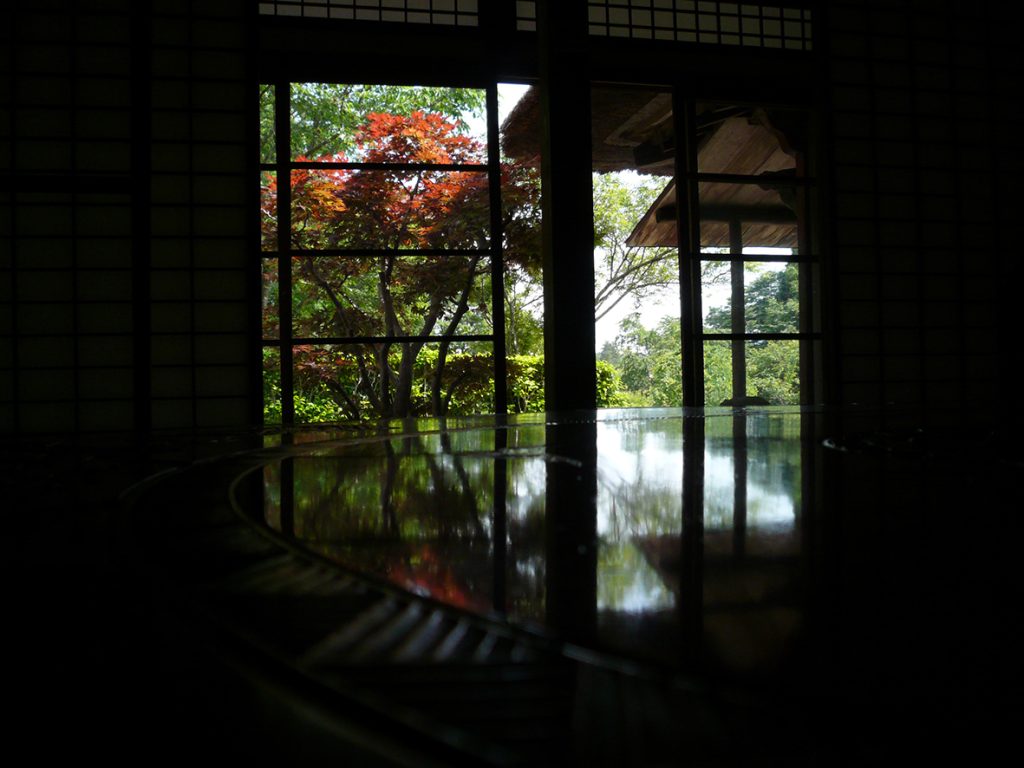
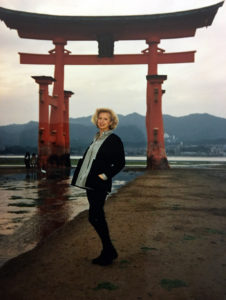
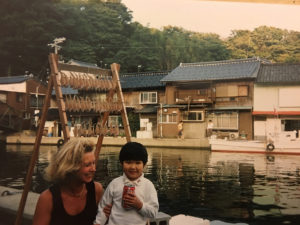
Deeply drawn to Japanese sensibility, Sylvie Buisson first studied Japanese Art and Japanese culture during her studies in Fine Arts and Art History in Paris. However, nothing can replace a stay in Japan—in Tokyo and Kyoto, of course, but also in all regions of the country. This became possible through her husband’s aikido and kendo training sessions beginning in 1975. Their discovery of Japan reinforced their sense of affinity with this country. They first embarked on creating a work about Japanese temples and shrines: no French book existed on this subject at the time. They also published several articles about their discovery of Japan in French journals, illustrating them with their own photographs. Then, gradually, they focused on Foujita’s work in 1980. Japan is therefore a love story born at the Beaux-Arts and during their university studies, which was later confirmed through the reality of Japan—its arts, its crafts, and its ways of life, natural, traditional, and innovative—and subsequently through the study of a striking example of a bridge between France and Japan: the artist Tsuguharu-Léonard Foujita.
Foujita was the perfect excuse to fuel their passion for Japanese culture, and the driving force behind research pursued every day.
Like his native country, this unique artist knew how to combine opposing forces, or at least opposites—that is, innovation and tradition—in the same way that he blended East and West, great joys and misfortunes. He knew how to transform the course of his life, an epic saga, into magical works.
Traditional or modern, Japan remains above all itself, meaning it is as true in tradition—and its experience, still perpetuated today in the rules of art—as it is in the most innovative, extravagant, surprising modernity, often at the forefront of the global avant-garde. And this is what always fascinates Sylvie Buisson; the Japanese apply the same care to inventing and performing new modern elements (art, fashion, technology…) as they do to following ancestral ways of life and customs—which they absolutely do not wish and cannot do without. It is a beautiful example she would like to transpose to Europe, and France in particular. A model of balance pushed to the extreme—fully embraced.
Traveling to Japan was essential for Sylvie Buisson, not only as a necessity that allowed her to meet members of the Fujita family and his friends, the last witnesses of his life, and to admire his works present in various homes, but also as an initiatory, philosophical, and human journey.
By retracing Foujita’s steps, traveling thousands of kilometers across Japan, from the place of his birth—today a large garage not far from the river—to the often-destroyed sites of his various residences, the artist came to life before her eyes and his work took on extremely tangible dimensions. Visiting the place where Madeleine died in the spring of 1936, at the site of the Mexican-style house of which only the gateway pillars remain intact—the rest burned in the 1945 Tokyo bombing—was a moment of grace; accompanied by Nobuko Fujita, evoking her wonderful memory of Madeleine, the expert became aware of the difficulties of existence that Foujita had overcome to avoid sinking into despair or madness… And of his great strength of soul.
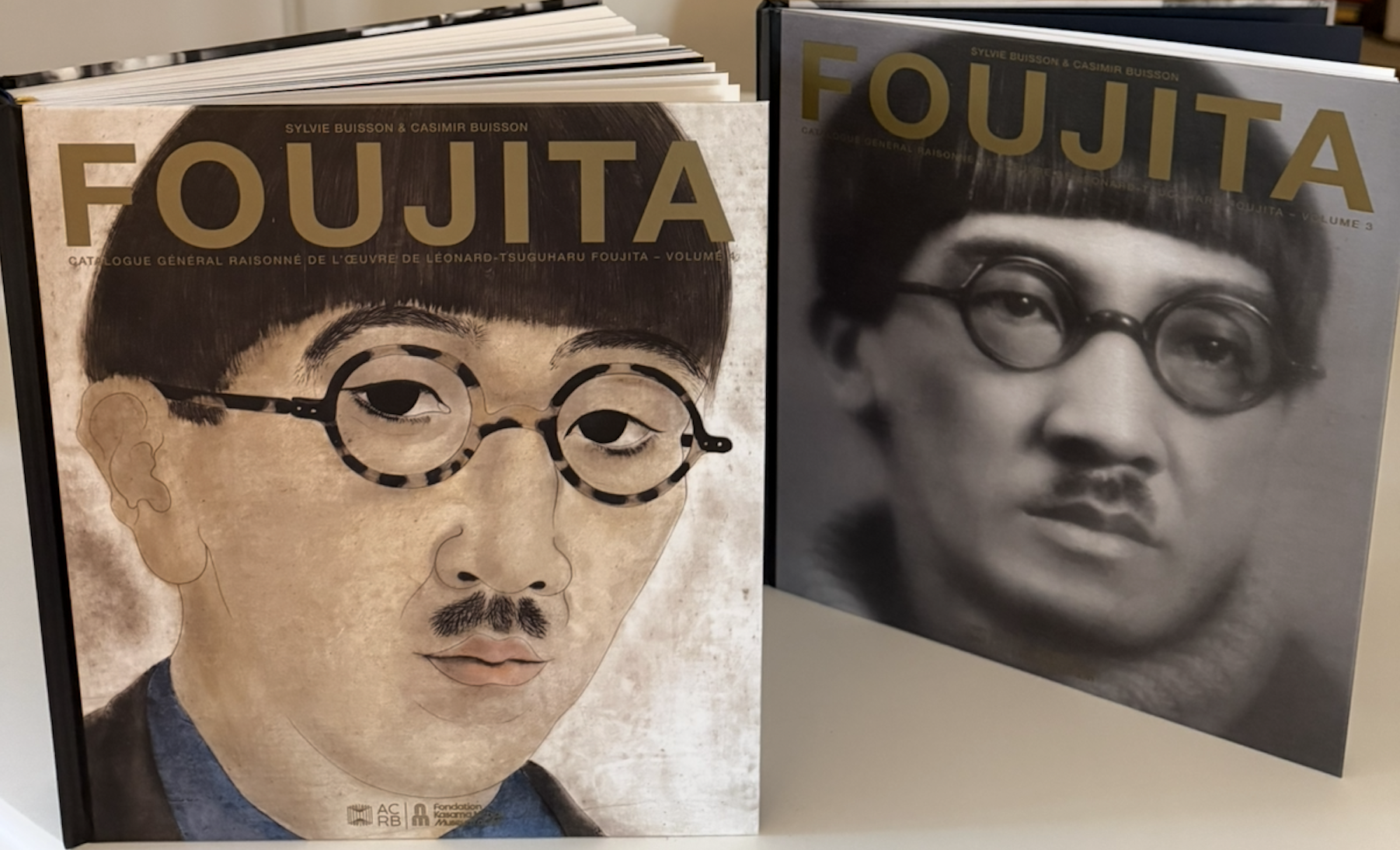
Organizing exhibitions in Japan and publishing the Catalogue Général Raisonné of Foujita’s Work lead to new journeys and new stays that are always equally enriching.
1929, A few pine trees and Mount Fuji on an invitation card invite Parisians to take tea at the major Japanese Art exhibition in which Foujita participates © Fondation Foujita /ADAGP, Paris, 2025 for all uses of Foujita’s works, name, and image.